On Israel’s eighth front, rabbis are on the front line
We are in a moment of unprecedented challenges for Israel and the Jewish people.
Read Rabbi Weinblatt’s Keynote Address at the ZRC Annual Conference
Political hatred of Israel has united the far right and far left in a vitriolic and twisted union. School board candidates are issuing platforms that spend more time attacking Israel than acknowledging lagging reading skills. The bipartisan consensus around the mutually beneficial U.S.-Israel relationship that lasted for more than half a century has collapsed under the weight of a relentless media assault.
Jews today live under more duress than they have in generations. Recently, for example, UCLA’s student government issued an official condemnation of the campus Hillel, for the simple “crime” of having invited former Hamas hostage Omer Shem Tov to speak. At the University of Oregon, Miss Israel was barred from speaking. Meanwhile, the University of California, Berkeley extended a warm invitation to a convicted terrorist. Polling shows the impact of these dangerous double standards, with younger voters tending to be significantly more antisemitic and holding views more critical of Israel than older ones.
It is, as Elie Wiesel would say, a world gone mad.
Part of the problem is due to the nature of our politics today, where disproportionate attention is given to the most extreme views. It’s like the playground where the loudest and angriest kid gets rewarded with the most attention.
This is a time that calls for and demands leadership. Rabbis are uniquely positioned in this moment to challenge and counter the negative portrayals of Israel in the media and social media platforms, to clarify and correct misconceptions and misperceptions. Rabbis can and must restore belief in the decency of our people and inspire and impart a sense of hope in our next generation. Rabbis are also well positioned to rebut false narratives and convey the historic ties of the Jewish people to the land of Israel.
For the past two-and-a-half years, Israel has been fighting a seven-front war, fighting against Iran, Hamas in Gaza, Hezbollah in Lebanon, the Houthis in Yemen, as well as militants in Iraq, Syria, and the West Bank. While our tradition teaches that seven is a sacred number — seven blessings at a wedding, seven days of creation, seven branches of the menorah — in this instance, seven represents danger. Each front is comprised of enemies with the determined goal to destroy the Jewish state.
And there is also an eighth front — the global war in the court of public opinion. It’s a war fought on countless college campuses, in newsrooms across the country, in local elections and beyond. It is on this front that rabbis are called to serve.
It is our responsibility as rabbis to help our congregants and the broader public understand Israel’s predicament by clarifying and dispelling the falsehoods spread about it and the Jewish people. Publicly criticizing Israel’s tactics, policies, or government does little to engender positive feelings about the Jewish state.
What some of our colleagues do not realize is that when rabbis publicly criticize a specific Israeli governmental policy or leader, the nuance often gets lost. Instead of instilling pride, their critiques instill a sense of shame and guilt. And when people are not proud of the Jewish state, they tend to be less proud of being Jewish, which often leads them to disconnect and disengage not just from Israel, but from the Jewish people, and ultimately from Judaism.
Our children are confronted and bombarded with a barrage of negative images of Israel. Now is the moment to teach our children to resist the haters, to love and respect Israel and to stand beside it while it faces existential threats. When Moses prepared to lead the people of Israel out of Egyptian bondage, he commanded the parents to tell the story and to teach their children of the Exodus and what God did for them, “v’higadeta l’vincha.” It is incumbent upon us to teach those who come after us.
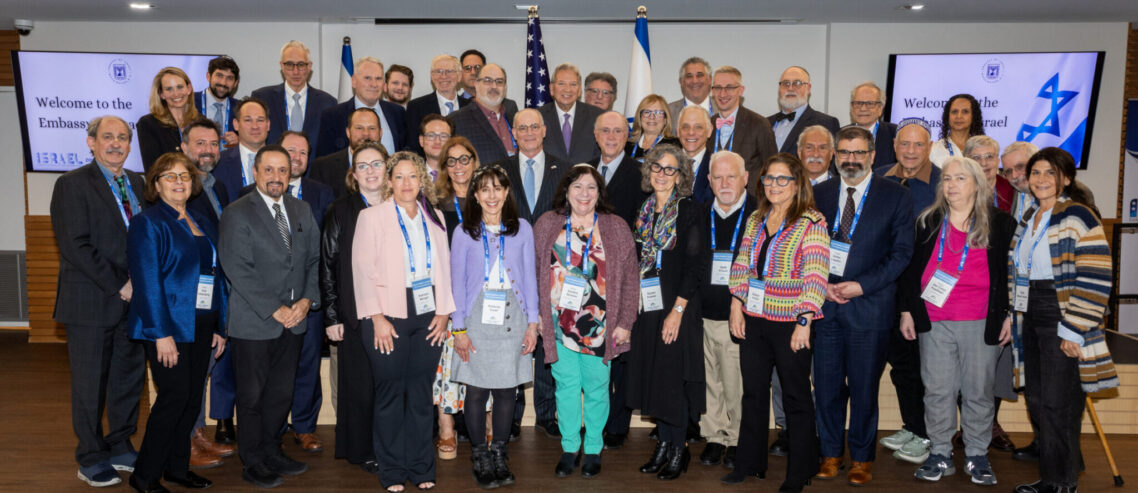
As the united voice of Zionist rabbis, the Zionist Rabbinic Coalition is working every day to equip rabbis with the insights, relationships, and tools they need to fight this fight. We want every rabbi to feel confident and empowered to spread the truth about Israel to their congregants, and to inspire them to stand together against antisemitism and hate.
We are living in an era where Israel’s haters have gone wild. They are nefarious, well-financed and well-organized. That is what we are up against. Our role as rabbis is to ensure that people’s relationship with Israel is not defined and determined by Israel’s detractors.
Now is the time for rabbis to lead, to let people know the myriad ways that the United States benefits from partnership with Israel, to tell the inspiring and miraculous stories of our people and what Israel has accomplished. If we don’t do this, who will?
Rabbi Stuart Weinblatt is the chair of the Zionist Rabbinic Coalition: The Voice of Zionist Rabbis, a network of over 2,000 rabbis committed to fostering love and dedication to Zionism and Israel.
Originally published in eJewishPhilanthropy